Choosing the Right Plastic Pallet: Bottom Support Guide
Published:
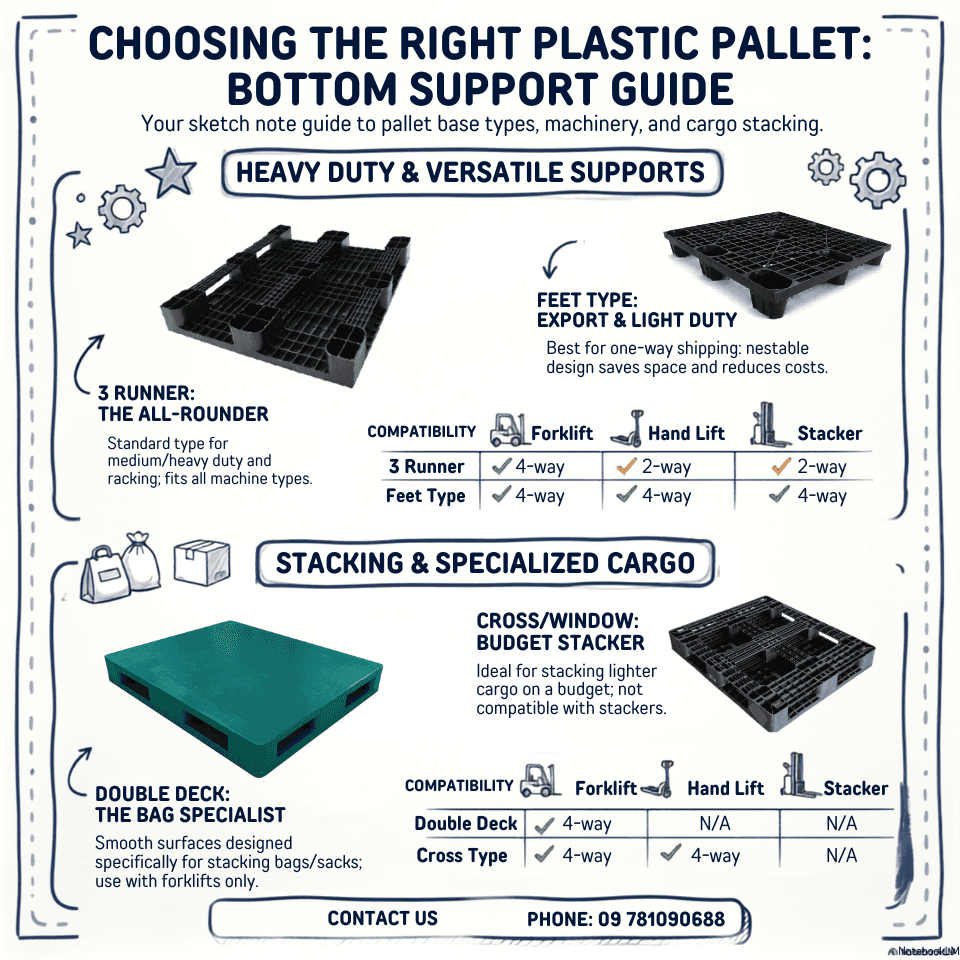
Choosing the Right Plastic Pallet: Bottom Support Guide
The bottom support structure is one of the most important — and most overlooked — specifications when selecting a plastic pallet. While most buyers focus on load capacity and size, the bottom design determines which equipment can handle the pallet, how it stacks, and what cargo types it suits. There are four standard bottom support types for plastic pallets.
The Four Bottom Support Types
1. 3-Runner Type
The 3-runner design features three horizontal runners running the length of the pallet, identical in concept to traditional wooden pallets. This makes it the most familiar design for operators transitioning from wood.
Best for: Medium to heavy-duty applications. The three-runner structure distributes load effectively and is compatible with forklifts, hand pallet trucks, and stackers from all four sides (4-way entry on most models).
2. Double Deck Type (Double Face)
The double deck design presents a smooth, flat surface on both the top and bottom of the pallet. This means either face can serve as the load-bearing surface, and pallets can be stacked directly on top of each other without surface interference.
Best for: Bagged goods such as rice, grain, cement, sugar, and fertilizer where the bags sit flush against the pallet surface and are stacked pallet-on-pallet in storage.
3. Cross Type / Window Type
The cross or window design has open sections in the base structure arranged in a grid pattern. This provides stacking capability similar to the double deck type but at a lighter duty rating and lower cost.
Best for: Light to medium cargo that needs to be stacked. A cost-effective option when the full durability of the 3-runner or double deck type is not required.
4. Feet Type (9 Feet, 18 Feet, 36 Feet)
The feet type uses individual support legs (feet) arranged in a 3×3, 3×6, or 6×6 grid pattern. This design is inherently nestable — empty pallets can be stacked inside each other, reducing storage volume by up to 75%.
Best for: Light-duty storage, export shipments, and operations where empty pallet storage space is at a premium. The nestable feature significantly reduces return logistics costs.
Before purchasing plastic pallets, match the bottom support type to your cargo weight, handling equipment, and storage method. The wrong choice can limit equipment compatibility or reduce load efficiency even if the overall capacity specification looks correct.