Choosing the Right Pallet: Load Capacity Guide
Published:
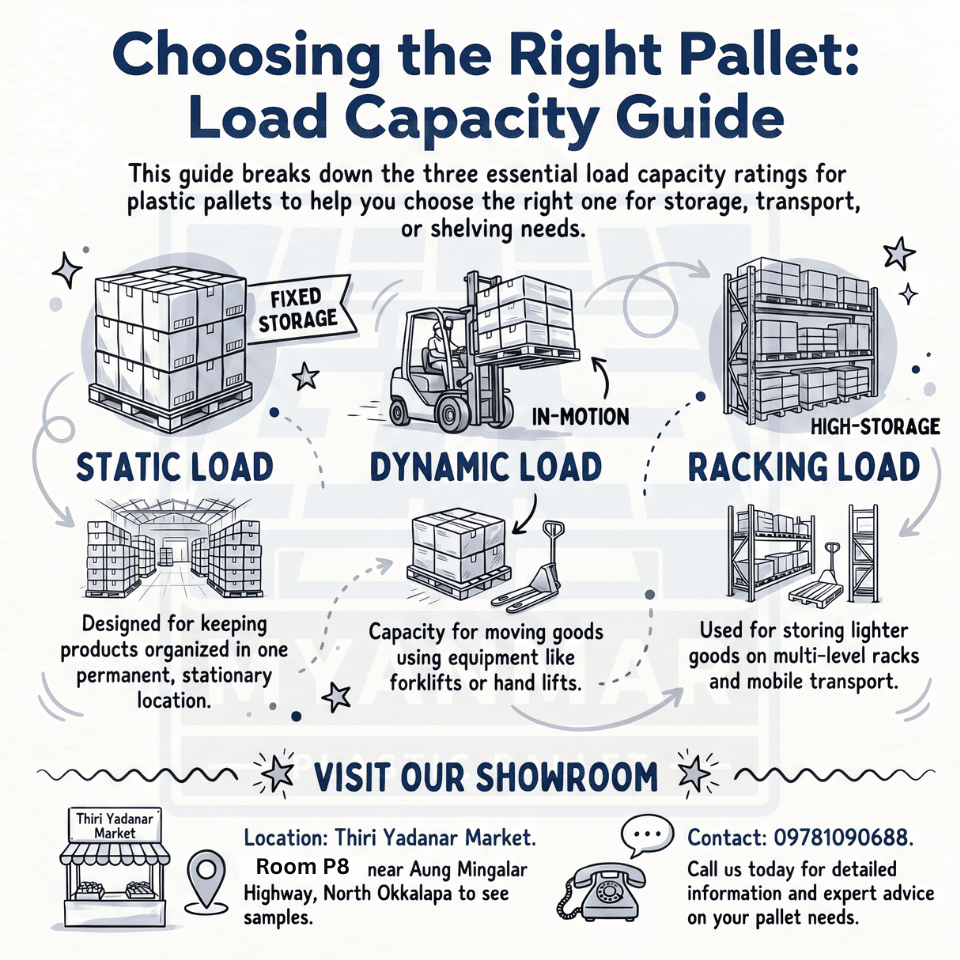
Choosing the Right Pallet: Load Capacity Guide
One of the most common and costly mistakes when purchasing plastic pallets is selecting based on a single load capacity figure without understanding what type of loading it refers to. Plastic pallet specifications list three distinct load capacity types, each measured under different conditions. Using the wrong capacity figure for your application can result in pallet failure and cargo damage.
The Three Load Capacity Types
Static Load
Definition: The maximum weight a pallet can support when placed on a flat, solid surface and left stationary.
Static load ratings assume the weight is evenly distributed across the pallet surface and the pallet is not moving. This is the highest capacity figure in any pallet specification and should only be used when pallets will remain stationary on a warehouse floor without being lifted or racked.
Typical application: Long-term floor storage of heavy goods where no mechanical handling occurs.
Dynamic Load
Definition: The maximum weight a pallet can carry while being moved by a forklift, hand pallet truck, or stacker.
Dynamic loads introduce vibration, impact, and uneven stress distribution as the pallet moves across floor surfaces and transitions. The dynamic load rating is always lower than the static load rating for the same pallet. This is the figure to use when your pallets will be moved regularly by mechanical equipment.
Typical application: Active warehouse operations where pallets are loaded, moved, and unloaded multiple times per day.
Racking Load
Definition: The maximum weight a pallet can bear when suspended across pallet racking beams with no solid floor support beneath the central section.
When a pallet sits on racking beams, the load is supported only at two points (the beam contact areas) while the center of the pallet spans unsupported. This bending stress is fundamentally different from floor support and results in a significantly lower capacity rating. Always use the racking load figure when pallets will be stored on any type of racking system.
Typical application: High-bay warehouse racking, selective pallet racking, drive-in racking.
How to Choose the Right Capacity for Your Operation
Select your target pallet based on the capacity type that matches your most demanding use case. If pallets will be both moved by forklift (dynamic) and stored on racking (racking), verify that both figures meet your load requirements — do not assume that a high static load figure guarantees adequate performance in racking or dynamic conditions.
As a practical guide:
- Floor-stored, stationary goods: use Static Load as your selection criterion.
- Goods moved by forklift or hand truck: use Dynamic Load.
- Goods stored on any racking system: use Racking Load.
Matching the right load capacity type to your actual use case is the most important step in selecting a pallet that performs reliably and safely throughout its service life.