Why Plastic Pallets Win the Rainy Season
Published:
Why Plastic Pallets Win the Rainy Season
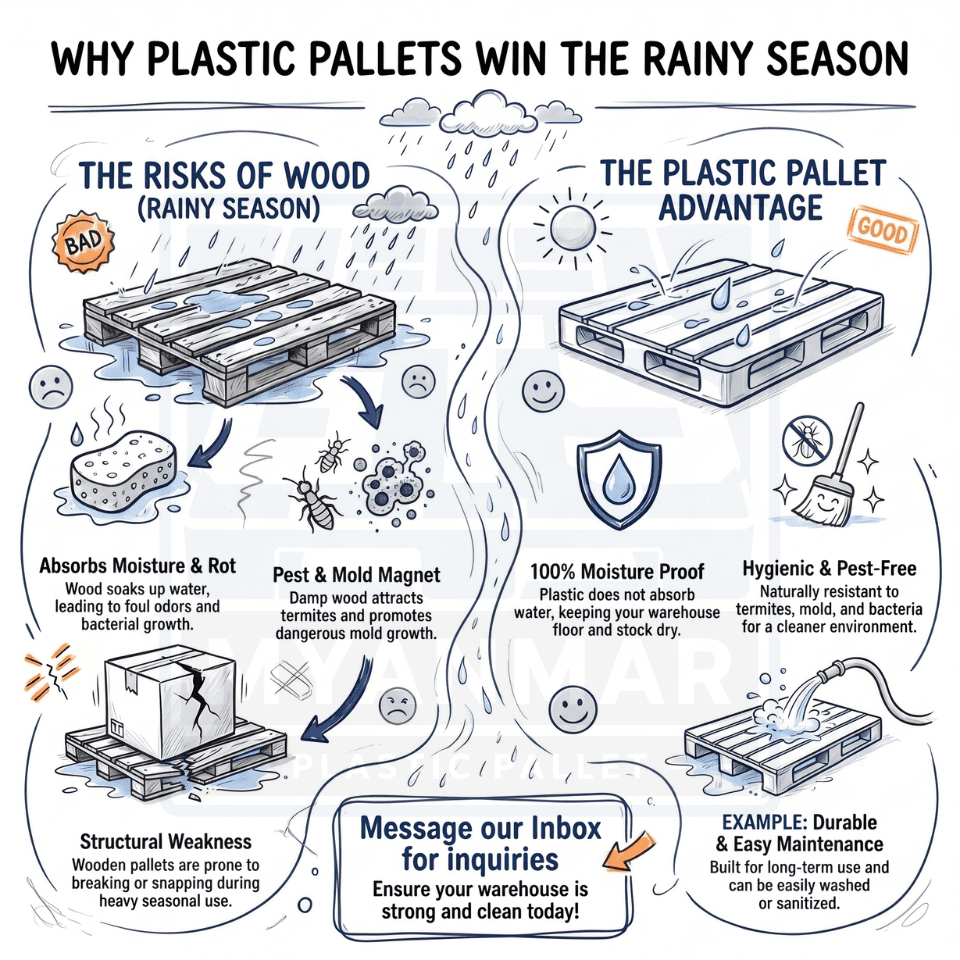
Myanmar's rainy season is the most demanding period of the year for warehouse and logistics infrastructure. Persistent humidity, wet loading docks, and frequent flooding put pallet materials under sustained stress. Plastic pallets are purpose-suited to these conditions in ways that wooden pallets cannot match.
Waterproof — No Rot, No Swelling
Plastic is inherently waterproof. A plastic pallet immersed in water for hours emerges structurally unchanged. There is no swelling, warping, or softening of the base material. In a wet warehouse environment where pallets contact standing water regularly, this means operational performance is maintained throughout the rainy season without any special treatment or inspection.
Wooden pallets in the same conditions absorb water into the grain, swell, warp out of flat, and begin to soften at the nail joints — typically resulting in premature failure after a few wet cycles.
Easy to Clean
A plastic pallet that has been exposed to rain, mud, or spilled cargo can be hosed down in minutes and returned to service immediately. The non-porous surface does not retain contaminants and dries rapidly. In food storage and pharmaceutical logistics — where cleanliness standards must be maintained even during rainy season operations — this is a critical advantage.
Durable Through the Full Season
Rainy season in Myanmar spans approximately six months. A plastic pallet purchased before the season begins will be in the same condition at the end of it. There is no wet-dry degradation cycle, no cumulative moisture damage, and no structural weakening from seasonal exposure.
No Mold, No Bacteria, No Insects
The three biological threats that rainy season conditions accelerate — mold, bacterial growth, and insect infestation — have no pathway on a plastic pallet. The non-porous surface provides no nutrients for mold or bacteria, and no food or habitat for termites or other wood-boring insects.
This makes plastic pallets suitable for food storage, pharmaceutical products, and other hygiene-sensitive cargo throughout the year, including the most challenging months.
Safe for Food and Pharmaceutical Use
Plastic pallets used in certified food and pharmaceutical supply chains meet the hygiene and contamination-control standards required by both local and international regulatory frameworks. During the rainy season, when contamination risk from wooden pallets is at its peak, plastic pallets ensure that your operation remains compliant and your goods remain protected.
For any Myanmar warehouse or logistics operation that experiences challenges during the rainy season, upgrading to plastic pallets before the next wet season begins is one of the most impactful infrastructure decisions available.