Upgrade to Plastic Pallets: Your Rainy Season Survival Guide
Published:
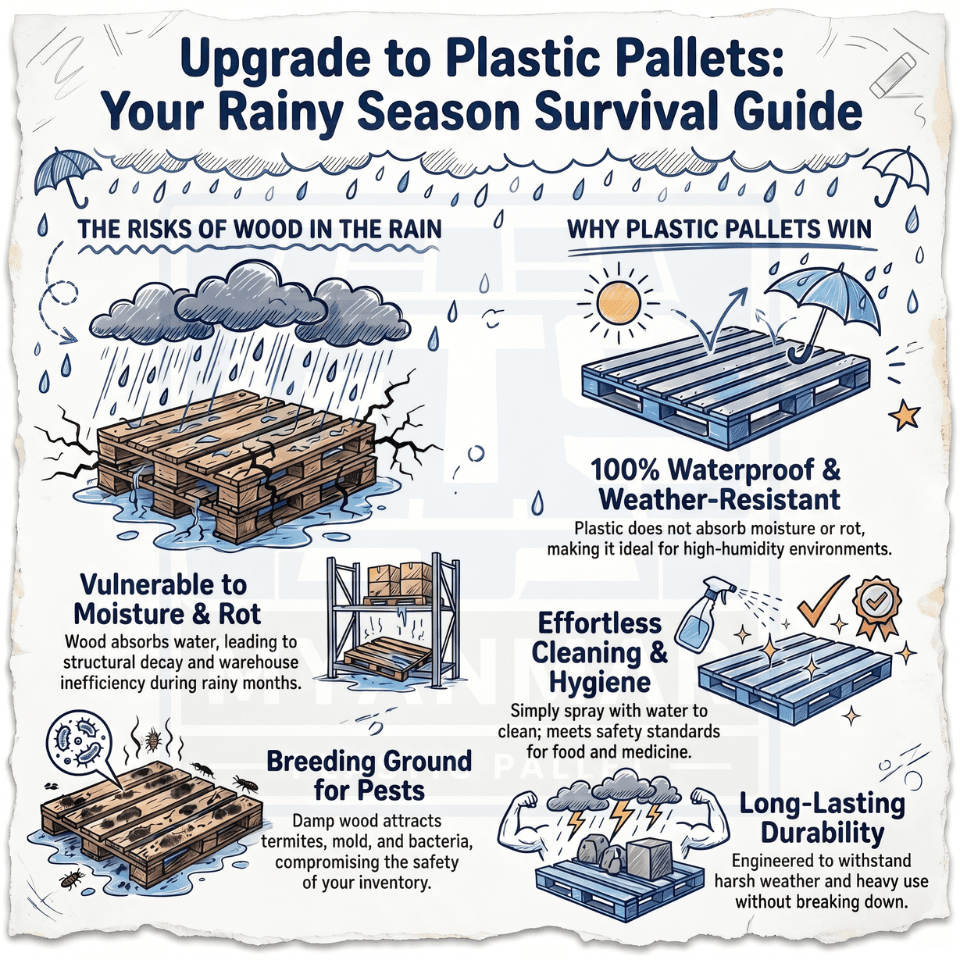
Upgrade to Plastic Pallets: Your Rainy Season Survival Guide
Myanmar's rainy season runs from May through October, bringing sustained humidity, frequent flooding, and persistent moisture in warehouses and logistics facilities across the country. For operations still using wooden pallets, this period creates a predictable set of problems that damage goods, slow operations, and inflate costs. Plastic pallets solve all of them.
The Rainy Season Problem with Wooden Pallets
When wooden pallets absorb moisture over weeks of high humidity and wet floors, several compounding issues emerge:
- Warping and swelling — absorbed moisture causes wooden boards to swell and warp, creating uneven surfaces that destabilize stacked cargo.
- Mold and fungal growth — wet wood provides ideal conditions for mold and bacteria to establish, contaminating stored goods — particularly food products.
- Structural weakening — repeated wet-dry cycles loosen nail joints and split wood fibers, leading to sudden structural failure under load.
- Insect infestation — damp wood attracts termites and other wood-boring insects that further accelerate deterioration.
These problems are not occasional — they affect virtually every warehouse using wooden pallets during Myanmar's wet months.
Why Plastic Pallets Win the Rainy Season
Waterproof by Design
Plastic pallets do not absorb water. The polymer surface sheds moisture completely, meaning a plastic pallet left in a wet warehouse or loading bay emerges with the same structural integrity it had when dry. No warping, no swelling, no weight gain from absorbed water.
Easy to Clean
A wet or contaminated plastic pallet can be hosed down and returned to service immediately. There is no need for drying time, chemical treatment, or inspection for mold before reuse.
Durable Through Repeated Wet-Dry Cycles
Where wooden pallets degrade rapidly through repeated exposure to moisture and drying, plastic pallets are unaffected. The same pallet that handles wet loading dock conditions in July will perform identically in the dry season months.
No Mold, No Insects, No Fumigation
Plastic does not support mold growth and provides no food or habitat for insects. This eliminates fumigation requirements, chemical treatment costs, and the contamination risk that mold-bearing wooden pallets pose to stored products.
Food and Pharmaceutical Safe
Plastic pallets meet the hygiene standards required for food storage and pharmaceutical handling. During the rainy season, when contamination risks from wooden pallets peak, switching to plastic is the most direct way to maintain compliance.
If your warehouse experiences recurring cargo damage, mold issues, or pallet failures during Myanmar's rainy months, upgrading to plastic pallets is the single highest-impact change you can make before the next wet season arrives.